
Caring for Senior Horses: What You Need to Know
More horses than ever are living into their twenties and even thirties, thanks to improved veterinary care and the dedication of owners who want to provide their companions with a happy and healthy retirement.
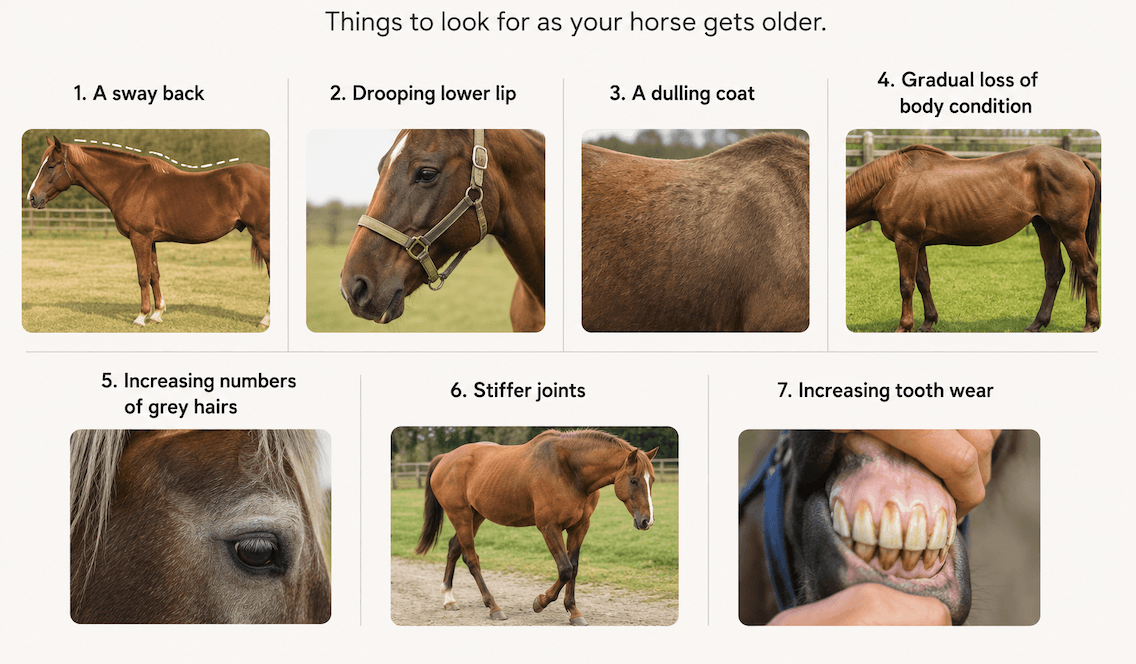
Exactly when a horse should be considered old can vary greatly. Their breed and the kind of life they have led can both play a role, which is why it can be more useful to look for signs of advancing age rather than relying on a particular number.
There are several important areas to consider when caring for an older horse.
Osteoarthritis and Joint Health
Osteoarthritis, also known as Degenerative Joint Disease, involves inflammation of the joints and surrounding tissues.
A healthy joint contains cartilage that helps prevent the bones from grinding against each other. When this cartilage becomes damaged, it can become inflamed and begin to deteriorate.
Eventually, this may lead to damage to the underlying bone and signs of pain or discomfort.
It is common for older horses to experience some level of joint pain due to the general wear and tear and repetitive movements that have occurred throughout their lives.
Osteoarthritis can affect any joint, although commonly affected areas include the:
- Coffin joint
- Pastern
- Fetlock
- Carpus or knee
- Tarsus or hock
Although an ageing horse may no longer be able to compete at the same level, less strenuous activity and appropriate medication where needed can help support them through retirement.
Dental Care for Senior Horses
Unlike humans, horses’ teeth continue to erupt as they are worn down through eating.
As horses get older, there may eventually be less tooth available to descend. Eating grass can become more difficult, chewing and digestion become less efficient, and fewer nutrients may be absorbed.
This can contribute to weight loss.
Regular dental examinations and floating throughout life can help maintain normal tooth wear and keep the mouth functioning comfortably.
For horses with missing or severely worn teeth, floating can help remove sharp points and make chewing more comfortable.
In some cases, a complete diet that is easier to chew and swallow may be required when maintaining weight on pasture is no longer possible.
Parasite Management
Monitoring intestinal parasites remains important in older horses.
Parasites and their effects on the intestine can contribute to weight loss and colic.
Faecal egg counts can be used to assess parasite burden by examining a fresh faecal sample under a microscope and determining the number and type of parasite eggs present.
This can help identify which horses require treatment while also helping avoid unnecessary use of anti-parasitic products.
Hoof Care
Good hoof care remains important for senior horses even if they are no longer in work.
Older horses can experience many of the same hoof problems as younger horses, including stone bruises and cracks.
They may also have ongoing issues associated with previous injuries, laminitis, Equine Metabolic Syndrome or Equine Cushing’s Syndrome.
Regular farrier care remains an important part of keeping an ageing horse comfortable.
PPID in Older Horses
One hormonal condition seen in geriatric horses is Pituitary Pars Intermedia Dysfunction, or PPID, which is also commonly known as Equine Cushing’s Disease.
The condition is generally seen in horses from their mid-teens into their twenties and older.
Signs may include:
- A long or curly coat that does not shed normally in summer
- Pot belly and sway back
- Changes in attitude, including becoming quieter or more docile
- Increased or decreased sweating
- Increased drinking and urination
- Loss of muscle tone and mass
- Recurrent infections
- Recurrent foot abscesses
- Recurrent episodes of laminitis
Based on your horse’s history, clinical signs and blood testing, we can assess whether PPID may be present.
Helping Your Horse Enjoy Their Later Years
Growing older does not necessarily mean your horse has to stop enjoying life.
Monitoring joint health, dental condition, body weight, parasite burden, hoof health and hormonal changes can help identify problems that may otherwise make their later years uncomfortable.
Regular veterinary care and paying attention to gradual changes in your horse can help us adjust their management and support them throughout retirement.
If you have noticed changes in your older horse’s weight, movement, coat, teeth or behaviour, speak with our team so we can assess their health and discuss the care they may need.