
Heartworm Disease in Dogs: What You Need to Know
Heartworm is a serious and potentially life-threatening disease that every dog owner should be aware of, particularly in areas where mosquitoes are present throughout the year.
Unlike some parasites that are easy to see, heartworms live inside the body and can cause significant damage before obvious signs develop. The good news is that heartworm disease is preventable, making consistent protection an important part of caring for your dog.
What Causes Heartworm Disease?
Heartworm disease is caused by a parasite called Dirofilaria immitis. Adult heartworms can grow to around 12-30 cm long and primarily live in the blood vessels supplying the lungs and, in more advanced infections, the heart.
Heartworm is spread by mosquitoes. When a mosquito feeds on an infected dog, it can pick up immature heartworm larvae. These develop inside the mosquito before being passed to another dog when the mosquito feeds again.
The Life Cycle of Heartworm
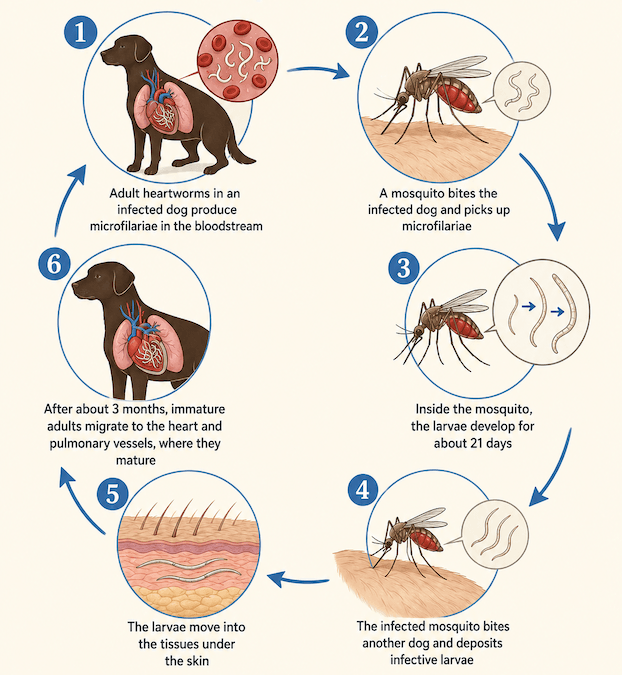
Adult female heartworms produce microscopic larvae called microfilariae, which circulate through an infected dog’s bloodstream.
When a mosquito feeds on that dog, it takes in the microfilariae. The larvae then continue developing inside the mosquito.
If that infected mosquito later bites another dog, the infective larvae enter the dog’s body and begin developing further. Over the following months, they migrate through the tissues and eventually reach the blood vessels associated with the heart and lungs.
This is why mosquitoes play such an important role in the spread of heartworm disease.
Signs of Heartworm Disease in Dogs
Heartworm infection may not cause obvious symptoms in its early stages. As the disease progresses, signs can become more noticeable.
Signs may include:
- Reduced exercise tolerance
- Coughing
- Rapid or difficult breathing
- Swelling of the abdomen due to fluid accumulation
- Signs associated with right-sided heart failure
Some infected dogs may initially show few or no obvious signs, which is one reason testing and prevention are so important.
How Is Heartworm Diagnosed?
Blood testing plays an important role in diagnosing heartworm disease.
Testing may include looking for:
- Heartworm antigens
- Microfilariae circulating in the blood
Antigen testing is commonly used to detect infection, while additional testing for microfilariae can provide further information.
Depending on the dog and the severity of the infection, further diagnostic tests may also be recommended, including:
- X-rays
- Ultrasound
- Blood tests to assess liver and kidney function
These tests can help us understand the extent of the disease and any damage that may have occurred.
What Damage Can Heartworm Cause?
Adult heartworms primarily affect the pulmonary arteries and can also affect the right side of the heart.
Over time, infection can cause inflammation and damage to the blood vessels and lungs. More advanced disease can lead to breathing problems, heart failure and other serious complications.
The severity of heartworm disease can vary depending on factors such as how long the dog has been infected and the number of worms present.
Treating Heartworm Disease
Treatment is possible, but it can be lengthy and requires careful veterinary management.
Once heartworm has been diagnosed, we may need to perform additional testing to assess your dog’s overall health and determine the most appropriate treatment plan.
Treatment generally involves medication to target different stages of the heartworm infection, followed by medication designed to eliminate adult heartworms. Strict activity restriction is also an important part of treatment because complications can occur as the worms die.
Every case is different, so treatment needs to be planned and closely monitored by a veterinarian.
Prevention Is Better Than Treatment
Heartworm disease is much easier to prevent than it is to treat.
Preventative options can include regular oral or topical treatments and longer-acting injectable prevention, depending on what is appropriate for your dog.
Because mosquitoes can be present throughout the year in North Queensland, maintaining continuous heartworm prevention is particularly important.
If your dog has missed heartworm prevention, has an uncertain prevention history or is starting prevention later in life, speak with our team. Heartworm testing may be recommended before starting or restarting preventative treatment, particularly for dogs seven months of age or older.
Protecting Your Dog From Heartworm
Heartworm can cause serious damage to your dog’s heart and lungs, but consistent prevention can significantly reduce the risk.
The most important thing is to make heartworm prevention a regular part of your dog’s ongoing health care and avoid letting doses lapse.
If you’re unsure whether your dog is up to date with heartworm prevention, or you have missed a dose, get in touch with our team. We can check your dog’s prevention history, discuss whether testing may be appropriate and help you choose a preventative option that suits your pet.